
Children's Morning Digital Routine & Daily Screen Time Compass: How to Start the Day Calmly and Healthily
Children who frantically grab screens in the morning aren't being rebellious; they suffer from 'uncertainty anxiety.' Discover the pedagogical power of a transparent, predictable morning digital compass.
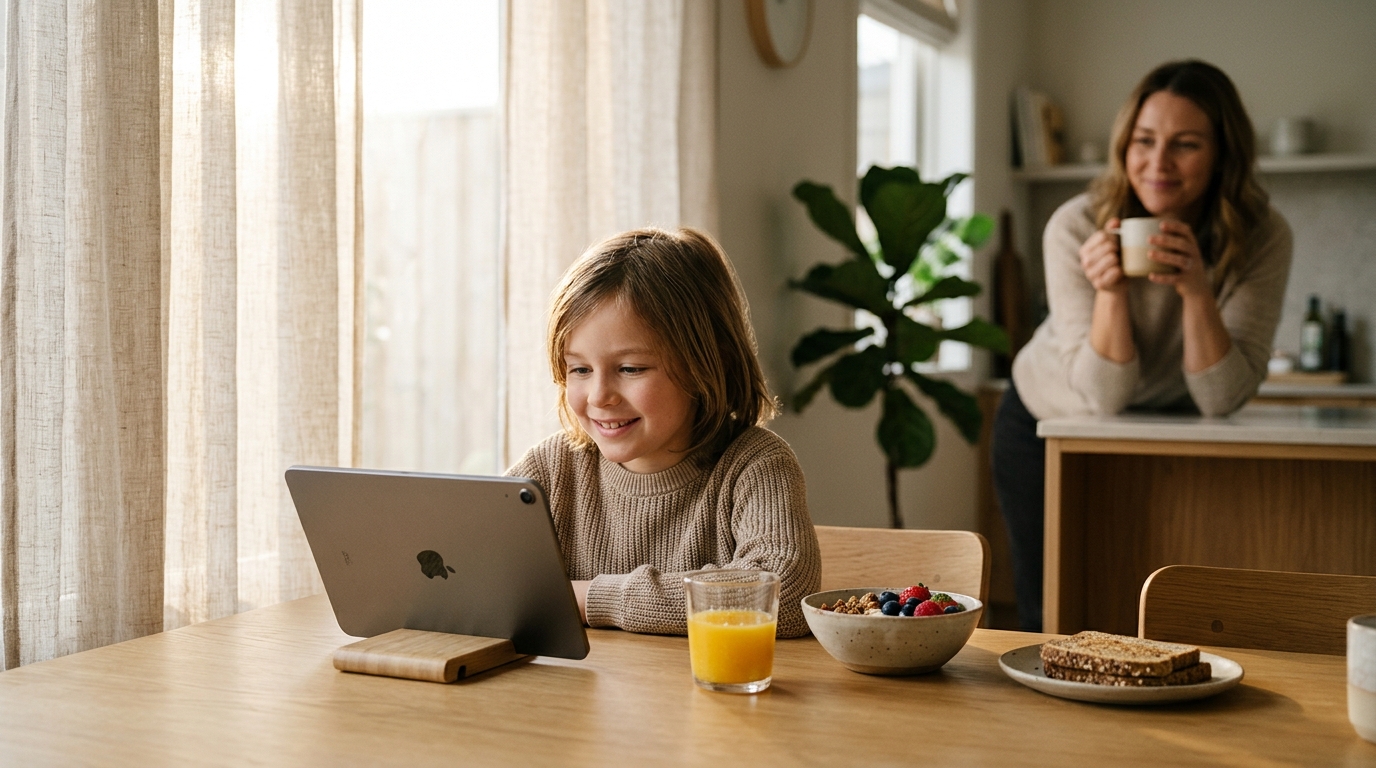
In countless homes, mornings begin with an exhausting battle: A child wakes up and immediately reaches for a phone or tablet. When parents say, 'Put that away, it's time for school!', it triggers tears, slammed doors, and heightened anxiety. Parents often mislabel this as addiction or stubbornness. In reality, developmental neuroscience reveals a different truth: children grasp at devices frantically because they don't know what their day holds. Uncertainty creates a scarcity panic in the developing brain: 'They will take it away soon anyway, so I must binge as much as possible right now!' Overcoming this cycle does not require authoritarian bans; it requires giving the child a transparent, predictable 'Morning Digital Briefing' from their very first unlock.
How Morning Uncertainty Affects the Child Brain
The 4 neurological drivers behind morning screen power struggles.
1. Scarcity Anxiety & Dopamine Bingeing
When children don't know their daily limit, fear of sudden loss drives them toward hyper-stimulating video feeds and games, spiking morning cortisol levels.
2. Immature Prefrontal Cortex
Children lack mature executive functioning to manage abstract limits like 'a little bit.' A concrete, visual morning schedule calms cognitive overwhelm.
3. Circadian Rhythm & Sleep Priming
Learning at 8:00 AM what time the screen rests tonight mentally prepares the brain for evening melatonin release and frictionless bedtimes.
4. From Parental Policing to Co-Regulation
Hearing limits shouted spontaneously by parents feels like an attack. Seeing an objective, loving morning compass fosters cooperative self-discipline.
5 Steps for a Peaceful Morning Routine
Pedagogical steps that eliminate morning tension and foster child autonomy.
Transparent Greeting Upon First Morning Unlock
Address the child by name with a warm greeting, presenting today's total screen hours clearly from the very start.
Clearly Outlining Resting Categories
Knowing upfront that high-risk games or social media are resting today eliminates the anger of surprise in-app block screens.
Embedding Eye and Body Wellness Breaks
Establishing that a 10-minute eye break will occur after every 30-40 minutes of use normalizes healthy optical habits.
Announcing Bedtime When the Sun Rises
Informing the child early in the day about tonight's sleep mode hour reduces nighttime bedtime resistance by over 80%.
Affirming Unconditional Family Love
Reminding the child each morning that digital guidelines stem from deep parental care and protection, not punishment.
Explore Morning Digital Briefing & Healthy Compass
Learn how the morning glass interface in SmartFamilyEye Kids empowers kids between 06:00 and 12:00 AM.
Questions About Morning Digital Routines
❓ Is it healthy for children to look at screens right after waking up?
Pediatricians recommend daylight, stretching, and breakfast during the first 30 minutes of waking. When children do access their devices, encountering a gentle schedule overview instead of an infinite video feed fosters healthy mindfulness.
❓ Does SmartFamilyEye's morning briefing interrupt the child all day?
No. It is engineered with an anti-spam protocol that triggers strictly once per day, between 06:00 and 12:00 AM upon the first unlock.
❓ Can the child dismiss the morning screen without reading?
A friendly button allows immediate dismissal, or it gracefully fades away after 30 seconds, ensuring it never feels intrusive.
❓ What are the recommended screen allowances by age?
Guidelines recommend 45-60 min for ages 3-6, 1.5-2 hours for ages 7-12, and 2-3 hours for ages 13+. SmartFamilyEye calculates these automatically.
Bring Calm and Digital Balance to Your Family Mornings
Start each day with mutual trust, transparent expectations, and family warmth.