
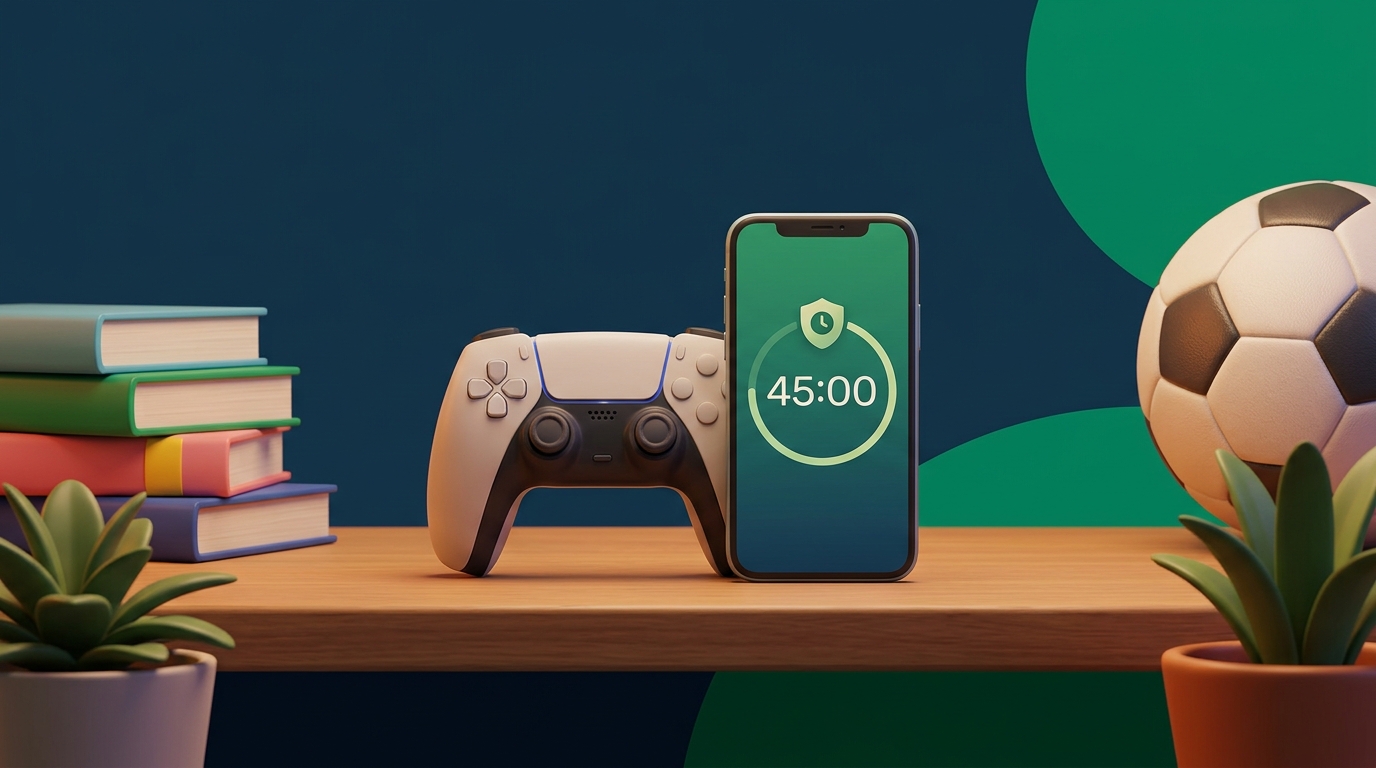
Does your child throw massive tantrums whenever asked to turn off the console or phone? Are "Just one more round!", "Wait for the checkpoint!", and "My friends are waiting for me!" causing nightly battles in your home? Modern video games and infinite video algorithms are specifically engineered to hijack young reward centers. Breaking this addictive cycle is entirely possible—when you replace constant conflict with smart, automated boundaries.
How Games Capture Young Brains: The Dopamine Trap
Modern mobile and multiplayer games are not merely games; they are finely tuned neurobiological dopamine dispensers. Level-up chimes, loot box opening animations, daily login streaks, and fear of missing out (FOMO) maintain artificial dopamine highs in developing brains.
This continuous stimulation makes real-life activities that require sustained patience—such as homework, reading books, or playing sports—feel unrewarding by comparison, because real life does not deliver instant confetti and XP points.
5 Warning Signs of Problematic Gaming Habits
Not every enthusiastic gamer has an addiction. However, the presence of these 5 red flags signals the urgent need for structured parental boundaries:
- Total Loss of Time Control: Promising to play for "15 minutes" and remaining glued to the screen for 3 hours.
- Aggression & Meltdowns: Explosive anger, shouting, crying spells, or physical tantrums when devices are turned off.
- Neglecting Basic Physical Needs: Postponing bathroom breaks, skipping meals, or demanding snacks in front of the screen.
- Social & Academic Withdrawal: Declining invitations to meet friends outdoors and experiencing a marked drop in school grades.
- Restlessness Away From Devices: Being constantly distracted, daydreaming about game tactics, and obsessing over the next session.
Why Abruptly "Pulling the Plug" Backfires
Angrily snatching away the tablet or pulling the Wi-Fi router plug causes an abrupt neurochemical crash in your child’s brain. This triggers a biological fight-or-flight defense response, sparking intense resentment rather than cooperation.
Predictable, system-enforced boundaries—such as automated 15-minute warnings and scheduled cutoffs—remove emotional parent-vs-child friction and establish healthy routines.
Managing Gaming Calmly with SmartFamilyEye
SmartFamilyEye provides parents with stress-free tools to restore digital peace at home:
- Per-App Category Limits: Keep educational and creative apps open while restricting games to a strict 60 or 90 minutes.
- Gentle Pre-Lock Warnings: Display polite on-screen reminders so children can wrap up competitive matches gracefully.
- Homework & Night Locks: Automatically lock games during homework hours and bedtime.
- Weekly Usage Breakdown: Transparent analytics showing exactly which games are played and for how long.
❓ Frequently Asked Questions
How much gaming time is healthy for children?
Pediatric associations recommend capping non-educational entertainment screen time at 1 to 1.5 hours per day for school-age children.
How can I stop fights when it is time to turn off the game?
Automated tools like SmartFamilyEye make the timer neutral—the device locks itself automatically, eliminating parent-child friction.
Are games like Roblox and Brawl Stars dangerous?
The games themselves foster creativity, but open in-game voice and text chats expose children to strangers, making content moderation essential.
Should I use game time as a reward for completed chores?
Relying exclusively on gaming as a reward elevates its perceived value in your child’s mind. Use diverse rewards such as family outings and shared board games.
Ready to Safeguard Your Child’s Digital World?
Set screen time limits from a single dashboard, block inappropriate content, and secure school commutes with real-time GPS tracking using SmartFamilyEye.