
How Do Violent Video Games Affect Children? Parent Guide
Examine the impact of violent video games on child aggression, empathy, and gaming addiction backed by APA and WHO scientific research.
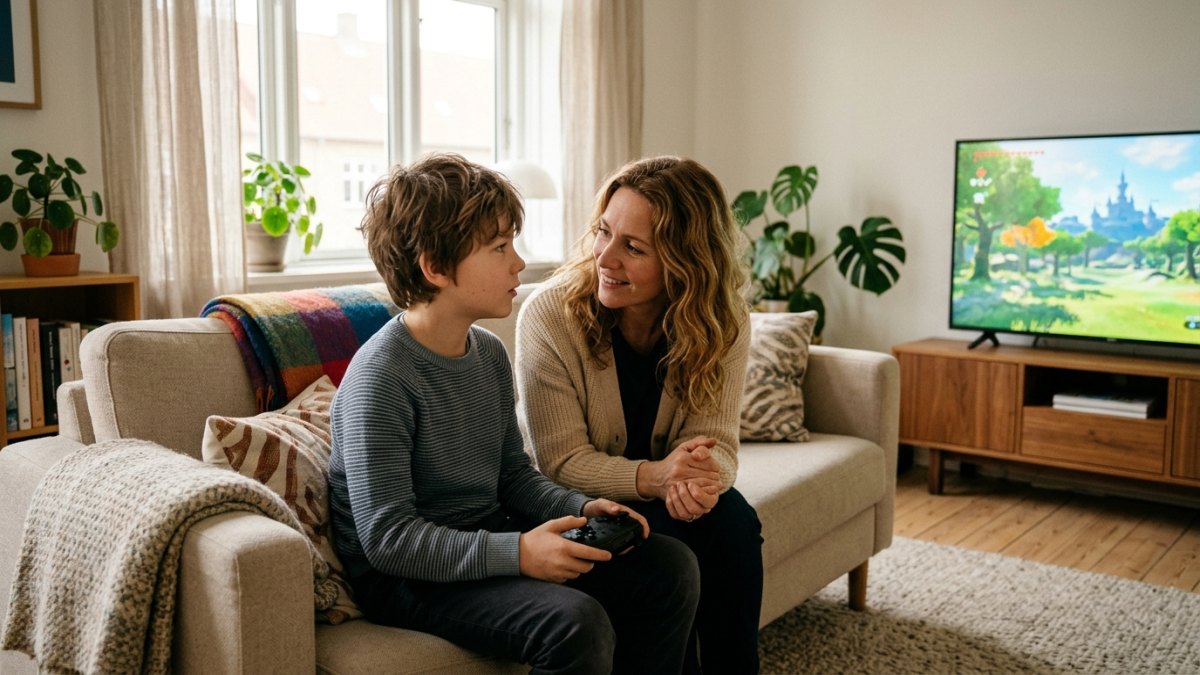
Video games are a central social playground for kids today. But when blood, combat, and firearms fill the screen, parents naturally worry: Do violent games genuinely cause aggression, or are tantrums just temporary frustration?
What Does Post-Game Tantrum Really Mean?
“Is your child peaceful while playing, but suddenly furious and irritable the moment the console shuts down? Do you truly know what content they are playing?”
Many parents observe this pattern: deep focus during gaming, followed by slamming doors when time is up. However, research proves children do not all react identically. A child's age, temperament, everyday stress, and family dialogue shape how game themes are processed.
How Can Violent Video Games Affect Children?
4 key developmental mechanisms identified by pediatric psychologists:
Desensitization to Violence
Prolonged exposure to simulated combat can normalize suffering in a child's mind, potentially dulling emotional shock to real-world cruelty.
Aggressive Cognitive Priming
Adrenaline-fueled combat triggers fight-or-flight arousal. Leaving a session abruptly can spill this physiological tension into daily interactions.
Empathy & Prosocial Behavior
Games solely focused on elimination rather than cooperation may slow the natural development of sharing and perspective-taking.
Exposure to Inappropriate Themes
Adult-targeted titles can induce night terrors, anxiety, and ungrounded fears in children whose abstract reasoning is still maturing.
What Does the American Psychological Association Say?
The APA research confirms small statistical associations between violent video games and minor aggressive outcomes (like competitive thoughts), but explicitly states there is insufficient evidence linking violent games to criminal violence or severe real-world harm.
When Does Passion Turn Into Gaming Addiction?
4 diagnostic warning signals based on WHO clinical guidelines:
Loss of Control Over Gaming
Inability to stop, monitor duration, or respect agreed finish times, repeatedly breaking promises to log off.
Sleep, School & Family Disruption
Skipping meals, deteriorating academic performance, and staying up late into the night playing.
Loss of Interest in Offline Life
Abandoning sports, reading, hobbies, or face-to-face friendships in favor of gaming sessions.
Continuation Despite Negative Consequences
Persisting with excessive gaming despite failing grades, physical strain, or intense family conflicts.
WHO Gaming Disorder Criteria
The WHO defines Gaming Disorder by impaired control, priority given to gaming over life interests, and escalation despite negative outcomes over at least 12 months. Playing many hours alone is not sufficient for diagnosis without functional impairment.
Quick Parental Self-Assessment Checklist
- ✓ Does my child react with intense rage when asked to stop gaming?
- ✓ Are meals or sleep frequently delayed because of gaming matches?
- ✓ Do I actively verify the PEGI or ESRB age ratings of their library?
- ✓ Has gaming replaced their real-world friendships and physical hobbies?
- ✓ Is their weekly gaming time higher than study and outdoor hours combined?
What Can Parents Do? 5 Practical Steps
Constructive parenting strategies that build digital responsibility without toxic friction:
Check PEGI & ESRB Age Ratings
Strictly review age ratings on physical boxes or digital app stores. Stand firm against peer pressure when games are rated 16+ or 18+.
Establish Collaborative Time Limits
Co-create boundaries instead of issuing unilateral bans. Agree on weekday vs. weekend quotas and let your child set the finish timer.
Prioritize Sleep, Exercise & Family Time
Enforce "homework and outdoor activity first." Make device-free bedrooms and a 60-minute pre-bed digital curfew a universal family norm.
Talk About Games Instead of Banning
Ask open-ended questions: "What makes this mission so thrilling?" or "Why did losing make you so frustrated?" Understand their digital world.
Seek Professional Guidance When Needed
If hostility escalates into physical aggression or school refusal, consult a child psychologist or family counselor promptly.
| Age Rating | Content Level | Example Genres | Parental Action |
|---|---|---|---|
| PEGI 3 / 7 | Mild cartoon mischief, no blood | Sports, platformers, racing | Safe, general time management |
| PEGI 12 | Fantasy combat, mild language | Strategy, arcade adventure | Supervise online chat and time |
| PEGI 16 | Realistic weapon combat, blood | Tactical shooters, action RPG | Close monitoring, restrict voice chat |
| PEGI 18 | Extreme graphic violence, mature | Crime sandbox, survival horror | Inappropriate for minors |
How to Supervise Child Gaming with SmartFamilyEye
Foster digital trust and proactive balance rather than reactive penalties:
App & Game Usage Analytics
View precise daily and weekly breakdowns of which games your child plays and for how long.
Game-Specific Screen Time Limits
Cap addictive gaming titles at 45 minutes daily while keeping educational tools accessible.
Instant Pause & Family Focus Mode
Temporarily lock gaming apps during dinner or homework sessions with a single tap.
Remote Restriction of Mature Apps
Instantly disable age-inappropriate titles or in-app purchases remotely from your parental console.
Protecting children from digital hazards does not mean banishing technology. What truly matters is understanding what games they play, how long they stay engaged, and how these habits shape daily life. SmartFamilyEye empowers families to navigate digital habits with mindfulness. When guided thoughtfully, technology enriches a child's growth.
Complementary Guides for Digital Family Harmony
Child Phone Addiction: Psychological Signs & Effects
Explore dopamine loops, behavioral triggers, and social withdrawal.
Physical Effects of Screen Time on Children
Understand text neck, eye strain, and circadian disruption.
How to Control Child Screen Time: 7 Proven Methods
Implement conflict-free digital contracts and reward systems.
Frequently Asked Questions
Do violent video games make children aggressive?
According to the APA, violent games can briefly prime aggressive thoughts or irritability, but scientific evidence does not show they directly cause violent crimes or severe aggression. Parenting, temperament, and environment are far stronger determinants.
How do you spot video game addiction in kids?
Under WHO diagnostic criteria, key signs include loss of control over playing time, prioritizing gaming over sleep, school, or hygiene, and continuing excessive play despite evident negative consequences.
At what age can children play violent games?
International age rating bodies (PEGI and ESRB) explicitly advise that games with realistic gun violence and gore should not be played before age 16, and adult graphic violence should be restricted until 18.
How can parents limit child gaming time effectively?
Set boundaries collaboratively through a digital family agreement rather than abrupt confiscation. Using SmartFamilyEye allows automated daily limits, removing friction and emotional bargaining.
What should you do if a child gets angry over gaming?
Post-game anger is driven by dopamine depletion and adrenaline. Give a 10-minute and 5-minute countdown before stopping, and allow a brief cool-down period rather than immediately confronting their anger.
Balance Your Child’s Gaming Habits with Confidence
Replace gaming tantrums with transparent screen boundaries and smart app restrictions. Start your 14-day free trial.